
链表
基础
单链表结点
Python:
# Definition for singly-linked list.
class ListNode:
    def __init__(self, val=0, next=None):
        self.val = val
        self.next = next
Golang:
// Definition for singly-linked list.
type ListNode strcut {
	Val  int
	Next *ListNode
}
Java:
public class ListNode {
    int val;
    ListNode next;
    ListNode() {}
    ListNode(int val) { this.val = val; }
    ListNode(int val, ListNode next) { this.val = val; this.next = next; }
}
双链表结点
Python:
## Definition for double-linked list.
class DoubleListNode:
    def __init__(self, val=0, pre=None, next=None):
        self.val = val
        self.pre = pre
        self.next = next
Golang:
// Definition for double-linked list.
type DoubleListNode strcut {
    Val  int
    Pre  *DoubleListNode
    Next *DoubleListNode
}
Java:
public class ListNode {
    int val;
    ListNode pre;
    ListNode next;
    ListNode() {}
    ListNode(int val) { this.val = val; }
    ListNode(int val, ListNode pre, ListNode next) { this.val = val; this.pre = pre; this.next = next; }
}
Leetcode 编程题
206. 反转链表
一、题目
反转一个单链表。
二、解析
1)普通
class Solution:
    def reverseList(self, head: ListNode) -> ListNode:
        if not head or not head.next:
            return head

        pre = None
        cur = head
        while cur:
            nxt = cur.next
            cur.next = pre
            pre = cur
            cur = nxt

        return pre
2)插入法
class Solution:
    def reverseList(self, head: ListNode) -> ListNode:
        if not head or not head.next:
            return head

        dummy = ListNode(0)
        dummy.next = head
        cur = head
        while cur and cur.next:
            nxt = cur.next
            cur.next = nxt.next
            nxt.next = dummy.next
            dummy.next = nxt

        return dummy.next
3)递归
class Solution:
    def reverseList(self, head: ListNode) -> ListNode:
        if not head or not head.next:
            return head
        res = self.reverseList(head.next)
        head.next.next = head
        head.next = None
        return res
92. 反转链表 II
一、题目
反转从位置 m 到 n 的链表。请使用一趟扫描完成反转。
说明: 1 ≤ m ≤ n ≤ 链表长度。
二、解析
找到第 m - 1 个结点,使用插入法。
代码如下:
class Solution:
    def reverseBetween(self, head: ListNode, m: int, n: int) -> ListNode:
        if not head or m == n:
            return head

        dummy = ListNode(0)
        dummy.next = head

        pre = dummy
        for _ in range(m - 1):
            pre = pre.next

        cur = pre.next
        for _ in range(n - m):
            nxt = cur.next
            cur.next = nxt.next
            nxt.next = pre.next
            pre.next = nxt

        return dummy.next
24. 两两交换链表中的节点
一、题目
给定一个链表,两两交换其中相邻的节点,并返回交换后的链表。 你不能只是单纯的改变节点内部的值,而是需要实际的进行节点交换。
二、解析
代码如下:
class Solution:
    def swapPairs(self, head: ListNode) -> ListNode:
        dummy = ListNode(0)
        dummy.next = head

        pre = dummy
        cur = head
        while cur and cur.next:
            pre.next = cur.next
            cur.next = cur.next.next
            pre.next.next = cur
            pre = cur
            cur = cur.next

        return dummy.next
25. K 个一组翻转链表
一、题目
给你一个链表,每 k 个节点一组进行翻转,请你返回翻转后的链表。
k 是一个正整数,它的值小于或等于链表的长度。
如果节点总数不是 k 的整数倍,那么请将最后剩余的节点保持原有顺序。
二、解析
使用插入法。代码如下:
class Solution:
    def reverseKGroup(self, head: ListNode, k: int) -> ListNode:
        dummy = ListNode(0)
        dummy.next = head

        pre = dummy
        cur = head
        while cur:
            end = cur
            for i in range(k - 1):
                end = end.next
                if not end:
                    return dummy.next
            end = end.next
            while cur and cur.next != end:
                nxt = cur.next
                cur.next = nxt.next
                nxt.next = pre.next
                pre.next = nxt
            pre = cur
            cur = end

        return dummy.next
234. 链表回文
一、题目
请判断一个链表是否为回文链表。
二、解析
快慢指针,并对前半部分进行翻转。
class Solution:
    def isPalindrome(self, head: ListNode) -> bool:
        fast = slow = head
        pre = None
        while fast and fast.next:
            fast = fast.next.next
            nxt = slow.next
            slow.next = pre
            pre = slow
            slow = nxt

        if fast:
            left, right = pre, slow.next
        else:
            left, right = pre, slow
        while left and right and left.val == right.val:
            left = left.next
            right = right.next

        return not left and not right
143. 重排链表
一、题目
给定一个单链表 L:L0→L1→…→Ln-1→Ln ,
将其重新排列后变为: L0→Ln→L1→Ln-1→L2→Ln-2→…
你不能只是单纯的改变节点内部的值,而是需要实际的进行节点交换。
二、解析
使用快慢指针,对右边的一半进行翻转。
代码如下:
class Solution:
    def reorderList(self, head: ListNode) -> None:
        """
        Do not return anything, modify head in-place instead.
        """
        if not head or not head.next:
            return
        ## 快慢指针,确定重点
        slow, fast = head, head
        while fast and fast.next:
            slow = slow.next
            fast = fast.next.next
        right = slow.next
        slow.next = None
        ## 右半部分链表反转
        pre, cur = None, right
        while cur:
            temp = cur.next
            cur.next = pre
            pre = cur
            cur = temp
        ## 拼接两个链表
        left, right = head, pre
        while left and right:
            temp2 = left.next
            temp3 = right.next
            left.next = right
            right.next = temp2
            left = temp2
            right = temp3
61. 旋转链表
一、题目
给定一个链表,旋转链表,将链表每个节点向右移动 k 个位置,其中 k 是非负数。
二、解析
遍历求链表总长度,将链表首尾相连。
代码如下:
class Solution:
    def rotateRight(self, head: ListNode, k: int) -> ListNode:
        if not head or not head.next or k == 0:
            return head

        count = 1
        cur = head
        while cur and cur.next:
            count += 1
            cur = cur.next

        k %= count
        if k == 0:
            return head

        cur.next = head  ## 首尾相连
        for i in range(count - k):
            cur = cur.next

        nxt = cur.next
        cur.next = None
        return nxt
21. 合并两个有序链表
一、题目
将两个升序链表合并为一个新的 升序 链表并返回。新链表是通过拼接给定的两个链表的所有节点组成的。
二、解析
1)循环
class Solution:
    def mergeTwoLists(self, l1: ListNode, l2: ListNode) -> ListNode:
        dummy = ListNode(None)
        p = dummy

        while l1 and l2:
            if l1.val < l2.val:
                p.next = l1
                l1 = l1.next
                p = p.next
            else:
                p.next = l2
                l2 = l2.next
                p = p.next

        p.next = l1 if l1 else l2
        return dummy.next
2)递归
class Solution:
    def mergeTwoLists(self, l1, l2):
        if l1 is None:
            return l2
        elif l2 is None:
            return l1
        elif l1.val < l2.val:
            l1.next = self.mergeTwoLists(l1.next, l2)
            return l1
        l2.next = self.mergeTwoLists(l1, l2.next)
        return l2
23. 合并K个有序链表
一、题目
给你一个链表数组,每个链表都已经按升序排列。
请你将所有链表合并到一个升序链表中,返回合并后的链表。
示例 1:
输入:lists = [[1,4,5],[1,3,4],[2,6]]
输出:[1,1,2,3,4,4,5,6]
解释:链表数组如下:
[
  1->4->5,
  1->3->4,
  2->6
]
将它们合并到一个有序链表中得到。
1->1->2->3->4->4->5->6
二、解析
1)一个一个合并。
class Solution:
    def mergeKLists(self, lists: List[ListNode]) -> ListNode:
        def merge_two_sorted_list(l1, l2):
            fake = ListNode(None)
            cur = fake

            while l1 and l2:
                if l1.val < l2.val:
                    cur.next = l1
                    l1 = l1.next
                    cur = cur.next
                else:
                    cur.next = l2
                    l2 = l2.next
                    cur = cur.next

            cur.next = l1 if l1 else l2
            return fake.next

        ans = None
        for l in lists:
            ans = merge_two_sorted_list(ans, l)

        return ans
分析:
- 时间复杂度:假设每个链表的最长长度是 。在第一次合并后,ans的长度为 ;第二次合并后,ans的长度为 。第 次合并后,ans的长度为 。第 次合并的时间代价是 ,那么总的时间代价为 ,故渐进时间复杂度为 。
- 空间复杂度:没有用到与 和 规模相关的辅助空间,故渐进空间复杂度为 。
2)分治法。虽然也是两个两个合并,但是使用分治的方法。可以参考归并排序。
代码如下:
class Solution:
    def mergeKLists(self, lists: List[ListNode]) -> ListNode:
        def merge_two_sorted_list(l1, l2):
            ## 与 方法1)相同
            pass

        def helper(lists):
            if len(lists) == 0:
                return None
            if len(lists) == 1:
                return lists[0]

            mid = len(lists) // 2
            left = helper(lists[:mid])
            right = helper(lists[mid:])
            return merge_two_sorted_list(left, right)

        return helper(lists)
分析:
- 时间复杂度:考虑递归「向上回升」的过程——第一轮合并 $ \frac{k}{2} $ 组链表,每一组的时间代价是 ;第二轮合并 $ \frac{k}{4} $组链表,每一组的时间代价是 ......所以总的时间代价是 ,故渐进时间复杂度为 。
- 空间复杂度:递归会使用到 空间代价的栈空间。
3)使用优先队列。优先队列用来维护每个链表的最小的结点。
代码如下:
class Solution {
    class Status implements Comparable<Status> {
        int val;
        ListNode ptr;

        Status(int val, ListNode ptr) {
            this.val = val;
            this.ptr = ptr;
        }

        public int compareTo(Status status2) {
            return this.val - status2.val;
        }
    }

    PriorityQueue<Status> queue = new PriorityQueue<Status>();

    public ListNode mergeKLists(ListNode[] lists) {
        for (ListNode node: lists) {
            if (node != null) {
                queue.offer(new Status(node.val, node));
            }
        }
        ListNode head = new ListNode(0);
        ListNode tail = head;
        while (!queue.isEmpty()) {
            Status f = queue.poll();
            tail.next = f.ptr;
            tail = tail.next;
            if (f.ptr.next != null) {
                queue.offer(new Status(f.ptr.next.val, f.ptr.next));
            }
        }
        return head.next;
    }
}
147. 对链表进行插入排序
一、题目
给定单个链表的头 head ,使用 插入排序 对链表进行排序,并返回 排序后链表的头 。
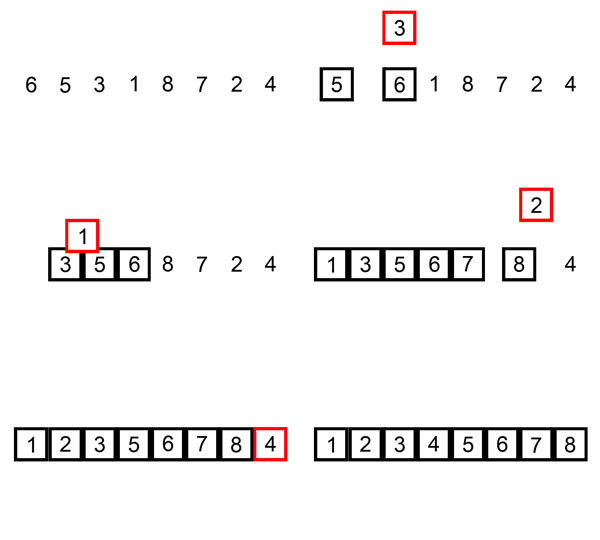
插入排序 算法的步骤:
- 插入排序是迭代的,每次只移动一个元素,直到所有元素可以形成一个有序的输出列表。
- 每次迭代中,插入排序只从输入数据中移除一个待排序的元素,找到它在序列中适当的位置,并将其插入。
- 重复直到所有输入数据插入完为止。
下面是插入排序算法的一个图形示例。部分排序的列表(黑色)最初只包含列表中的第一个元素。每次迭代时,从输入数据中删除一个元
素(红色),并就地插入已排序的列表中。
二、解析
使用 next 指针比较方便,不需要保存当前结点的前一个结点。
代码如下:
class Solution:
    def insertionSortList(self, head: ListNode) -> ListNode:
        if not head or not head.next:
            return head

        dummy = ListNode(None)
        dummy.next = head

        cur = head
        while cur and cur.next:
            if cur.val <= cur.next.val:
                cur = cur.next
                continue

            pre = dummy
            while pre.next.val <= cur.next.val:
                pre = pre.next
            ## 插入法,把nxt插在pre后面
            nxt = cur.next
            cur.next = nxt.next
            nxt.next = pre.next
            pre.next = nxt

        return dummy.next
148. 排序链表 - O(nlgn)
一、题目
给你链表的头结点 head ,请将其按 升序 排列并返回 排序后的链表 。
进阶: 你可以在O(nlogn) 时间复杂度和常数级空间复杂度下,对链表进行排序吗?
二、解析
1)使用归并排序。
class Solution:
    def sortList(self, head: ListNode) -> ListNode:
        def merge_two_sorted_list(l1, l2):
            dummy = ListNode(None)
            cur = dummy
            while l1 and l2:
                if l1.val < l2.val:
                    cur.next = l1
                    l1 = l1.next
                    cur = cur.next
                else:
                    cur.next = l2
                    l2 = l2.next
                    cur = cur.next
            cur.next = l1 if l1 else l2
            return dummy.next

        def merge_sort(head):
            if not head or not head.next:
                return head
            pre = None
            fast = slow = head
            while fast and fast.next:
                pre = slow
                slow = slow.next
                fast = fast.next.next
            pre.next = None

            left = merge_sort(head)
            right = merge_sort(slow)
            return merge_two_sorted_list(left, right)

        return merge_sort(head)
2)使用快速排序。
快速排序的第三种方法,选择头结点作为轴元素,因为选尾结点需要遍历一遍链表。
Python实现。代码没什么问题,但是最后一个测试用例没通过,结果超时。
class Solution:
    def sortList(self, head: ListNode) -> ListNode:
        def partition(head, tail):
            pivot = head.val
            store_node = head
            cur = head.next
            while cur != tail:
                if cur.val <= pivot:
                    store_node = store_node.next
                    store_node.val, cur.val = cur.val, store_node.val
                cur = cur.next
            head.val, store_node.val = store_node.val, head.val
            return store_node

        def quick_sort(head, tail):
            if head == tail or head.next == tail:
                return
            par_node = partition(head, tail)
            quick_sort(head, par_node)
            quick_sort(par_node.next, tail)

        quick_sort(head, None)
        return head
Java实现,逻辑相同,通过!
class Solution {
    public ListNode sortList(ListNode head) {
        quickSort(head, null);
        return head;
    }

    public void quickSort(ListNode head, ListNode tail) {
        if (head == tail || head.next == tail)
            return;
        ListNode par_node = partition(head, tail);
        quickSort(head, par_node);
        quickSort(par_node.next, tail);
    }

    public ListNode partition(ListNode head, ListNode tail) {
        int pivot = head.val;
        ListNode store_node = head;
        ListNode cur = head.next;
        while (cur != tail) {
            if (cur.val <= pivot) {
                store_node = store_node.next;
                swap(store_node, cur);
            }
            cur = cur.next;
        }
        swap(head, store_node);
        return store_node;
    }

    public void swap(ListNode n1, ListNode n2) {
        int temp = n1.val;
        n1.val = n2.val;
        n2.val = temp;
    }
}
2. 两数相加
一、题目
给出两个 非空 的链表用来表示两个非负的整数。其中,它们各自的位数是按照 逆序 的方式存储的,并且它们的每个节点只能存储 一位 数字。 如果,我们将这两个数相加起来,则会返回一个新的链表来表示它们的和。 您可以假设除了数字 0 之外,这两个数都不会以 0 开头。
二、解析
class Solution:
    def addTwoNumbers(self, l1: ListNode, l2: ListNode) -> ListNode:
        dummy = ListNode(0)
        cur = dummy

        p1, p2 = l1, l2
        carry = 0
        while p1 or p2 or carry != 0:
            x = p1.val if p1 else 0
            y = p2.val if p2 else 0
            carry, remainder = divmod(x + y + carry, 10)
            cur.next = ListNode(remainder)
            cur = cur.next
            if p1: p1 = p1.next
            if p2: p2 = p2.next

        return dummy.next
445. 两数相加 II
一、题目
给你两个 非空 链表来代表两个非负整数。数字最高位位于链表开始位置。它们的每个节点只存储一位数字。将这两数相加会返回一个新的链表。 你可以假设除了数字 0 之外,这两个数字都不会以零开头。 进阶:如果输入链表不能修改该如何处理?换句话说,你不能对列表中的节点进行翻转。
二、解析
使用栈!代码如下:
class Solution:
    def addTwoNumbers(self, l1: ListNode, l2: ListNode) -> ListNode:
        s1, s2 = [], []
        while l1:
            s1.append(l1.val)
            l1 = l1.next
        while l2:
            s2.append(l2.val)
            l2 = l2.next
        ans = None
        carry = 0
        while s1 or s2 or carry != 0:
            a = 0 if not s1 else s1.pop()
            b = 0 if not s2 else s2.pop()
            cur = a + b + carry
            carry = cur // 10
            cur %= 10
            curnode = ListNode(cur)
            curnode.next = ans
            ans = curnode
        return ans
160. 相交链表
一、题目
给你两个单链表的头节点 headA 和 headB ,请你找出并返回两个单链表相交的起始节点。如果两个链表不存在相交节点,返回 null 。
题目数据 保证 整个链式结构中不存在环。
注意,函数返回结果后,链表必须 保持其原始结构 。
二、解析
假装两个链表连接在一起,遍历完一个链表再遍历另一个链表。
代码如下:
class Solution:
    def getIntersectionNode(self, headA: ListNode, headB: ListNode) -> ListNode:
        if not headA or not headB:
            return None

        pA = headA
        pB = headB
        while pA != pB:
            pA = pA.next if pA else headB
            pB = pB.next if pB else headA
        return pA
141. 环形链表
一、题目
给你一个链表的头节点 head ,判断链表中是否有环。
如果链表中有某个节点,可以通过连续跟踪 next 指针再次到达,则链表中存在环。 为了表示给定链表中的环,评测系统内部使用整数 pos 来表示链表尾连接到链表中的位置(索引从 0 开始)。注意:pos 不作为参数进行传递 。仅仅是为了标识链表的实际情况。
如果链表中存在环 ,则返回 true 。 否则,返回 false 。
二、解析
1)哈希表。
代码如下:
class Solution:
    def hasCycle(self, head: ListNode) -> bool:
        seen = set()
        while head:
            if head in seen:
                return True
            seen.add(head)
            head = head.next
        return False
2)快慢指针。快指针一次走两步,慢指针一次走一步,如果链表有环,那么两个指针一定会相遇。
代码如下:
class Solution:
    def hasCycle(self, head: ListNode) -> bool:
        if not head or not head.next:
            return False

        slow = head
        fast = head.next

        while slow != fast:
            if not fast or not fast.next:
                return False
            slow = slow.next
            fast = fast.next.next

        return True
142. 环形链表II
一、题目
给定一个链表的头节点 head ,返回链表开始入环的第一个节点。 如果链表无环,则返回 null。
如果链表中有某个节点,可以通过连续跟踪 next 指针再次到达,则链表中存在环。 为了表示给定链表中的环,评测系统内部使用整数pos 来表示链表尾连接到链表中的位置(索引从 0 开始)。如果 pos 是 -1,则在该链表中没有环。注意:pos 不作为参数进行传递,仅仅是为了标识链表的实际情况。
不允许修改链表。
二、解析
1)使用哈希表。
Golang代码如下:
func detectCycle(head *ListNode) *ListNode {
    seen := map[*ListNode]struct{}{}
    for head != nil {
        if _, ok := seen[head]; ok {
            return head
        }
        seen[head] = struct{}{}
        head = head.Next
    }
    return nil
}
2)快慢指针。快慢指针相遇时,再定义一个指针从头开始走,新指针和慢指针会在链表开始入环的第一个节点相遇。
Golang代码如下:
func detectCycle(head *ListNode) *ListNode {
    slow, fast := head, head
    for fast != nil {
        slow = slow.Next
        if fast.Next == nil {
            return nil
        }
        fast = fast.Next.Next
        if fast == slow {
            p := head
            for p != slow {
                p = p.Next
                slow = slow.Next
            }
            return p
        }
    }
    return nil
}
138. 复制带随机指针的链表
一、题目
给你一个长度为 n 的链表,每个节点包含一个额外增加的随机指针 random ,该指针可以指向链表中的任何节点或空节点。
构造这个链表的 深拷贝。 深拷贝应该正好由 n 个 全新 节点组成,其中每个新节点的值都设为其对应的原节点的值。新节点的 next 指针和 random 指针也都应指向复制链表中的新节点,并使原链表和复制链表中的这些指针能够表示相同的链表状态。复制链表中的指针都不应指向原链表中的节点 。
例如,如果原链表中有 X 和 Y 两个节点,其中 X.random --> Y 。那么在复制链表中对应的两个节点 x 和 y ,同样有 x.random --> y 。
返回复制链表的头节点。
用一个由 n 个节点组成的链表来表示输入/输出中的链表。每个节点用一个 [val, random_index] 表示:
- val:一个表示 Node.val 的整数。
- random_index:随机指针指向的节点索引(范围从 0 到 n-1);如果不指向任何节点,则为 null 。 你的代码 只 接受原链表的头节点 head 作为传入参数。
提示:
- 0 <= n <= 1000
- -104 <= Node.val <= 104
- Node.random 为 null 或指向链表中的节点。
二、解析
代码如下:
class Solution:
    def copyRandomList(self, head: 'Node') -> 'Node':
        if not head:
            return None

        p = head
        seen = {}
        while p:
            seen[p] = Node(p.val)
            p = p.next

        fake = cur = Node(0)
        p = head
        while p:
            tmp = seen[p]
            tmp.next = seen[p.next] if p.next in seen else None
            tmp.random = seen[p.random] if p.random in seen else None
            cur.next = tmp
            cur = cur.next
            p = p.next

        return fake.next